Factory Finish vs Brush and Roll Kitchen Cabinets Which Looks Better
- HeritageKicthens

- 21 hours ago
- 9 min read
Kitchen cabinets take up more visual space than almost anything else in the room. When the finish looks smooth, even, and clean, the whole kitchen feels more polished. When the finish shows streaks, roller texture, or brush marks, the cabinets can make even a new countertop or backsplash feel less finished.
That is why the debate between a factory finish spray and a brush and roll cabinet paint job matters. Both methods can change the color of your cabinets, but they do not create the same final look. One is built for a sleek, high-end appearance. The other often looks more like a painted surface, with visible signs of how the paint was applied.

What a factory finish means for kitchen cabinets when talking about Factory Finish vs Brush and Roll
A factory finish usually refers to a sprayed cabinet finish applied in a controlled setting. On new cabinets, this happens before the cabinets are installed. On refinished cabinets, professionals often remove the doors and drawer fronts, prep them, and spray them off-site or in a controlled spray area.
The goal is a smooth, uniform coating that looks like it came from the manufacturer.
A quality sprayed finish often includes:
Careful cleaning and degreasing
Sanding or scuff sanding for adhesion
Filling minor imperfections when needed
Primer made for cabinets
Sprayed coats of paint, lacquer, enamel, or another cabinet-grade coating
Proper drying or curing time between coats
The biggest difference is the application. Spray equipment atomizes the finish into a fine mist. That mist lands evenly across the cabinet surface. When done well, the result has no brush lines and no roller stipple. The finish looks flatter, cleaner, and more consistent.
That is the look many people associate with custom cabinetry, high-end remodels, and premium cabinet brands.
What brush and roll means for cabinets
Brush and roll is exactly what it sounds like. A painter uses a brush to cut into edges, corners, and trim details, then uses a roller on larger flat surfaces.
This method can work well on walls, trim, and some furniture. Cabinets are less forgiving.
Cabinet doors have wide flat centers, narrow rails, recessed panels, grooves, corners, and edges that catch light from many angles. A small texture difference on a wall may disappear. On a cabinet door, it can stand out every time light hits it.
Common brush and roll issues include:
Brush marks along edges, rails, and door frames
Roller texture on flat door panels
Paint buildup in corners and profiles
Uneven sheen from overlapping strokes
Streaks caused by drying before the surface levels out
A thicker, hand-painted look
A skilled painter can reduce these issues with the right brush, foam roller, leveling paint, sanding between coats, and careful timing. Still, even a good brush and roll job usually has more texture than a sprayed finish.
That texture is the main reason many homeowners feel brush and roll cabinets look unfinished compared with a factory-style sprayed finish.

The visual difference is most obvious in the light
Cabinets are not viewed from one angle. They sit under recessed lights, pendants, windows, and under-cabinet lighting. Morning sun may show one set of flaws. Evening light may show another.
A factory finish holds up better under this kind of lighting because the surface is more even. Reflections look smoother. The color feels more consistent. The doors and drawer fronts look like they belong together.
Brush and roll finishes can look fine from across the room, especially in low light. Up close, the surface often tells a different story. You may see subtle lines where the brush stopped and started. You may see tiny orange-peel texture from the roller. On darker colors, those marks can show more because the sheen reflects more strongly.
This matters most on:
Tall pantry doors
Large slab cabinet fronts
Shaker doors with wide rails
Dark green, navy, black, or charcoal cabinets
Gloss, semi-gloss, or satin finishes
Kitchens with strong natural light
White and off-white cabinets can hide some texture, but they do not erase it. Once the eye catches brush marks on a cabinet door, they can be hard to ignore.
A sprayed finish looks more high-end because it looks intentional
High-end cabinets usually have one thing in common: the finish does not distract from the design.
The door style, hardware, countertop, and layout get attention. The paint itself simply looks clean and refined. That is what a factory finish does well.
A sprayed cabinet finish creates a more high-end look because it gives the cabinets:
Factory finish spray | Brush and roll |
Smooth, even surface | More visible texture |
Consistent sheen | Possible lap marks and streaks |
Clean edges when prepped well | Paint buildup in corners |
More manufactured appearance | More hand-painted appearance |
Better fit for modern and luxury kitchens | Better fit for budget updates or rustic looks |
The word “factory” matters because people connect it with precision. A factory-style finish suggests the cabinets were made that way, not just painted over. That can make older cabinets feel new again when the prep and finish are done correctly.
Brush and roll, by contrast, can make cabinets look refreshed but not replaced. That is not always bad. In a cottage, farmhouse, or casual rental kitchen, a lightly textured painted finish may be acceptable. For a sleek kitchen with stone counters, refined hardware, and clean lines, brush and roll can hold the room back.
Prep matters no matter which method you choose
Spray application gets a lot of attention, but the finish is only as good as the prep underneath it.
Cabinets collect oils, food residue, cleaning products, dust, and hand grime. Paint does not bond well to dirty or glossy surfaces. If the prep is poor, even sprayed cabinets can chip, peel, or look uneven.
Good cabinet prep usually includes:
Removing doors and drawer fronts
Labeling all hardware and pieces
Cleaning grease from every surface
Sanding to dull the existing finish
Repairing dents, chips, and open seams
Caulking or filling where appropriate
Applying a bonding primer
Sanding between coats for smoothness
This is where lower-cost cabinet painting often cuts corners. A quick sanding and a coat of paint may look acceptable for a few weeks. Over time, high-touch spots around handles may wear down. Edges may chip. Grease may bleed through. Old wood grain may show more than expected.
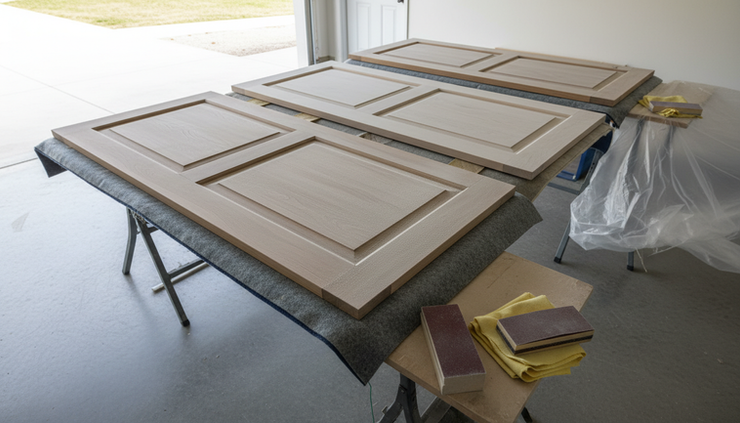
A factory finish spray process is usually more demanding because smooth paint exposes flaws. If the door surface has dents or dust nibs, the spray will not hide them. It will highlight them. That is why professional-level sprayed cabinets require patience before the paint ever touches the surface.
Durability depends on coating quality and curing time
Many people assume sprayed cabinets are automatically more durable. The truth is more specific.
The spray method improves the look and evenness of the finish. Durability depends on surface prep, primer, coating type, number of coats, and proper curing.
Cabinet-grade coatings are made to handle more contact than regular wall paint. Cabinets get touched daily. They face moisture, cooking oils, cleaning sprays, and bumps from dishes or cookware. A finish that works on drywall is not always strong enough for cabinet doors.
A quality sprayed cabinet finish can be very durable because professionals often use products designed for cabinetry. These coatings level well, dry hard, and create a smoother film. When applied in thin, even coats, they can cure into a surface that resists wear better than a thick rolled coat.
Brush and roll finishes can also last when done with the right products. The risk is that hand application often leaves thicker areas in corners and thinner areas on edges. Thick paint can stay soft longer. Thin edges can wear faster. Brush marks can also hold more grime over time, which makes cleaning harder.
Curing time matters for both methods. Paint may feel dry within hours, but it can take much longer to fully harden. During that period, doors need gentle handling. Reinstalling hardware too early, slamming doors, or aggressive cleaning can damage the finish before it reaches full strength.
Why factory finish cabinets cost more
A factory-style cabinet finish usually costs more because it takes more time, space, tools, and skill.
The process often includes removing doors and drawers, transporting them or setting up a spray area, masking the kitchen, controlling dust, spraying multiple coats, sanding between coats, and reinstalling everything carefully. Spray equipment also requires experience. Too much material can cause runs. Too little can create dry spray or uneven coverage.
Brush and roll jobs can be less expensive because the setup is simpler. The painter can often work with fewer tools and less masking. In some cases, the cabinet boxes, doors, and drawer fronts are painted in place. That lowers labor, but it can also limit the final quality.
The price difference is not just about paint. It reflects the level of finish being created.
A good way to think about it:
Brush and roll can be a cosmetic update
Factory finish spray can be a cabinet transformation
If the cabinets are in poor shape, badly built, or not worth saving, refinishing may not be the right investment. If the cabinet boxes are solid and the layout works, paying more for a better finish can make sense.
The impact on home value and buyer perception
Kitchens carry a lot of weight in how people judge a home. Buyers may not know the exact brand of paint or the refinishing process used, but they notice whether the cabinets look clean, current, and well done.
A sleek factory finish can make cabinets look newer and more expensive. It can help the kitchen feel move-in ready. That matters because many buyers mentally discount a home when they see projects they will need to fix.
Brush marks and roller lines can have the opposite effect. Even if the color is trendy, visible streaks may suggest a quick DIY job or a budget shortcut. That can make the kitchen feel unfinished.
This does not mean factory finish cabinets will guarantee a higher sale price. Home value depends on the full property, local market, layout, condition, and buyer demand. Still, quality finishes often support a stronger overall impression. When a kitchen looks professionally finished, the home feels better cared for.
That perception can matter during showings, appraisals, and everyday living. Even if selling is years away, a smoother finish gives you a kitchen that feels better each time you walk into it.

When brush and roll still makes sense
Brush and roll is not always the wrong choice. It can be practical in the right situation.
It may make sense if:
The budget is very limited
The cabinets are temporary
The kitchen is in a rental or secondary space
A rustic or hand-painted look fits the home
The cabinets already have heavy grain or texture
Perfection is not the goal
For example, older oak cabinets with strong open grain may not become perfectly smooth without extra grain filling, no matter how the finish is applied. In that case, a brush and roll job may be acceptable if the goal is simply to brighten the space.
Brush and roll can also work for small projects, like a laundry room cabinet, garage storage, or a bathroom vanity. The lower viewing distance and smaller surface area make texture less noticeable.
The key is setting the right expectation. If the goal is “fresh and better than before,” brush and roll may be enough. If the goal is “sleek, modern, and high-end,” sprayed is the stronger choice.
How to decide which finish is right for your kitchen
Start with the condition and quality of the cabinets. Solid wood or well-built cabinet boxes with a good layout are often worth a better finish. Cheap, damaged, or poorly arranged cabinets may not justify a premium refinishing process.
Next, think about the style of the kitchen. A modern kitchen with flat-panel doors, quartz counters, and simple hardware needs a cleaner finish. A traditional kitchen also benefits from a smooth finish because raised panels and detailed trim catch shadows.
Then look at lighting. If the room gets strong sunlight or has bright overhead lights, surface flaws will show. Spray finishing handles that better.
Finally, think about how long you plan to keep the kitchen. If you want the cabinets to look good for years, the better finish becomes easier to justify. If you are making a short-term update before a larger remodel, brush and roll may be enough.
A simple rule works well: choose the finish quality that matches the value of the room around it. If the kitchen has nice counters, lighting, flooring, and appliances, the cabinets should not look like the weakest part of the space.
The better-looking choice is factory finish spray
When the question is looks, factory finish spray is the clear winner. It gives kitchen cabinets a smoother surface, cleaner sheen, and more polished appearance. It reduces the streaks, brush marks, and roller texture that often make painted cabinets look unfinished.
Brush and roll has a place. It can be affordable, practical, and good enough for some projects. But it rarely delivers the same sleek, high-end look as a sprayed finish.
The higher price of factory finish cabinets can be worth it when the cabinet boxes are solid and the kitchen is an important part of the home. A clean, professional finish improves daily enjoyment and can support stronger buyer perception later.
If the goal is a kitchen that feels finished, refined, and built to belong in the home, a factory finish spray is usually the better investment. when it comes down to the decision between Factory Finish vs Brush and Roll the decision will be clear, once you decide between budget, look, and overall, what pleases you as a homeowner.


Comments